
Casa de Arte
The architect and the art
The collection at Colima 71 was built piece by piece, with Mexico City as its first reference and Alberto Kalach's building as the frame around it. Most works were placed for the rooms and corners they now sit in; none were placed at random.
Casa de Arte
The architect and the art
The collection at Colima 71 was built piece by piece, with Mexico City as its first reference and Alberto Kalach's building as the frame around it. Most works were placed for the rooms and corners they now sit in; none were placed at random.
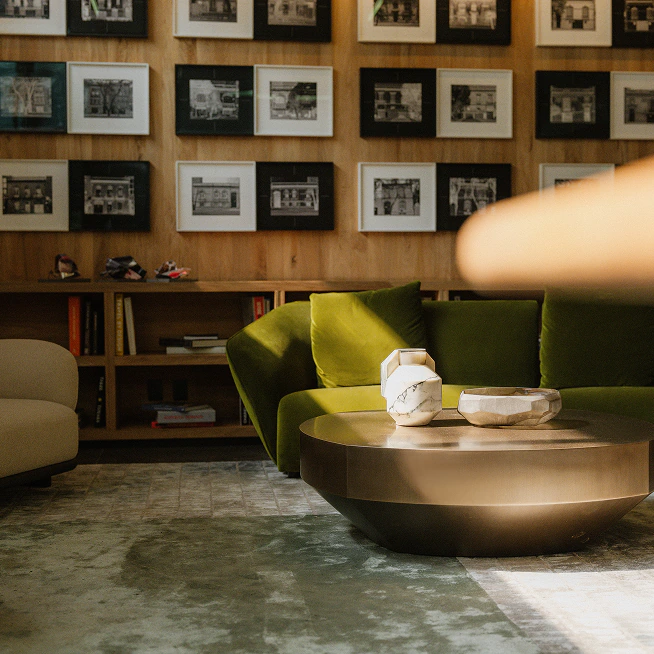
At the entrance, Iñaki Bonillas's Spectator of a Shipwreck: Twenty-four photographs of historic houses in Roma Norte, each one tilting a little further into the unstable lake-bed Mexico City was built on, ground that still pulls buildings down a few millimetres a year. A series about a place that has always been sinking, set at the door of a house that hasn't.
Sofía Táboas's lattice runs across four floors of the building's interior, a screen redrawn from the ironwork balconies and Art Deco geometry of the older houses still standing in Roma Norte. No two studios meet it at the same angle. The vegetation behind it and the light moving through it shift through the day; guests wake beside it and come back to it at dusk, and the work is never quite the same piece twice.
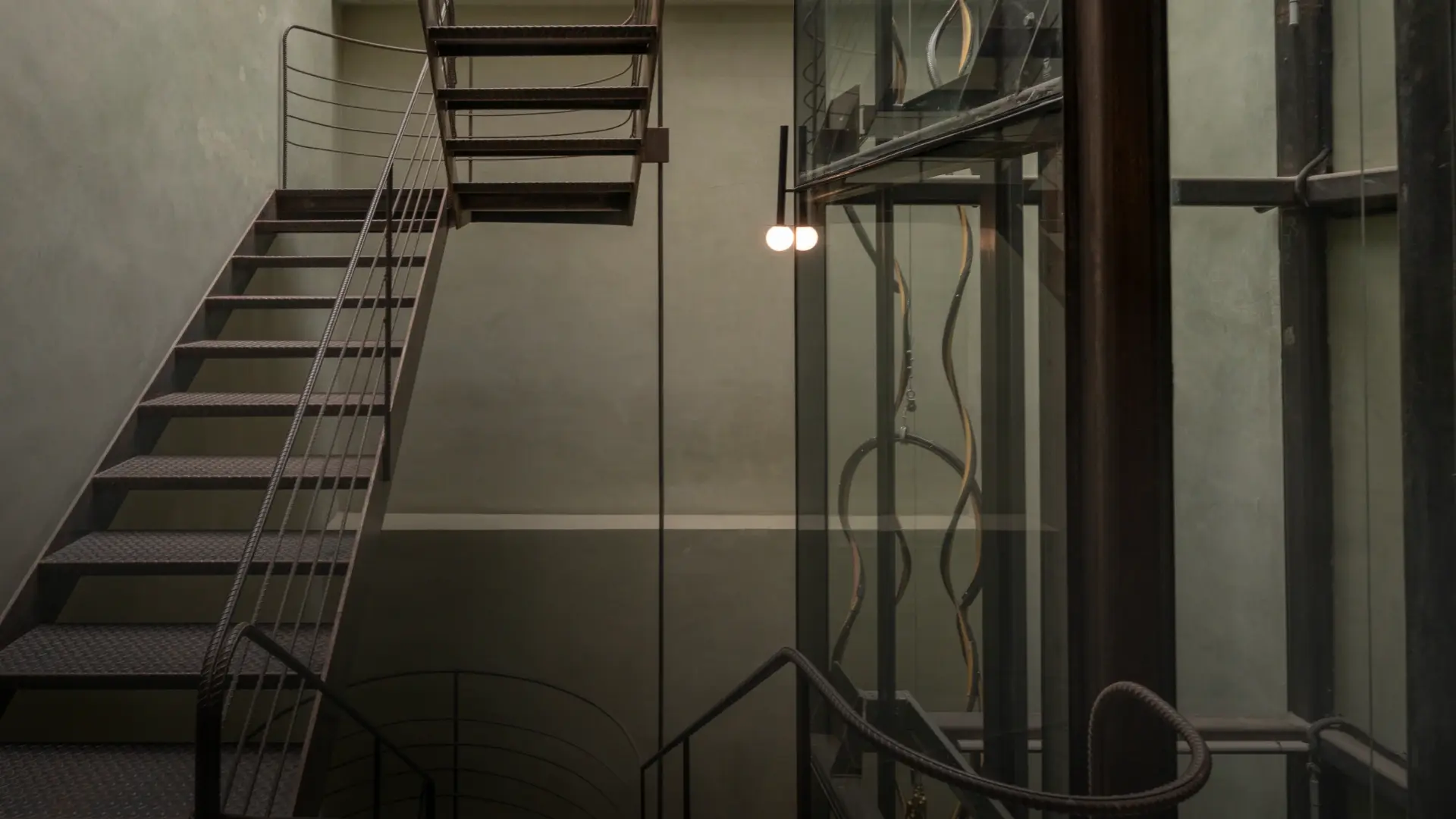
At the centre of the house, the architecture turns vertical. A skylight above the stair core opens the building's spine to daylight; below it, Kalach's working language settles into the walls: Textured stucco, raw concrete, metal, glass, and the cool air of a shaded interior. The shaft can be climbed by a steel stair or crossed by a glass-and-metal lift; either way, the light has shifted by the time you reach the top.
Across eighteen metres of that shaft, the Guatemalan artist Darío Escobar's Quetzalcóatl runs the full height, a monumental piece in scale with the building rather than the rooms. The reference is the feathered serpent of Mesoamerica; the language is contemporary and urban. Mexico City reaches the work as material and scale, not as nostalgia.
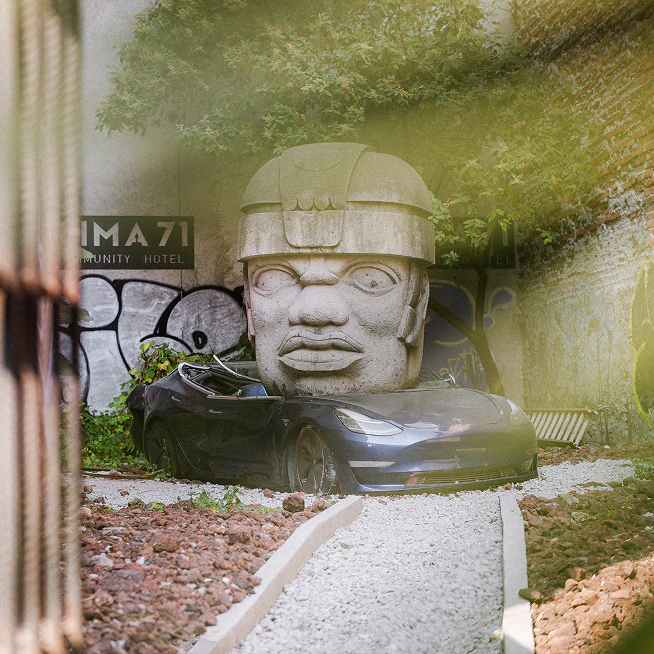
Beside the building, in the lot, Chavis Mármol's Tesla Crushed by an Olmec Head. A nine-ton replica of a colossal Olmec head, one of the carved monumental heads left by the first great civilisation of Mesoamerica some three thousand years ago, sits on a blue Tesla Model 3. Part of his Neo-Tameme series, and one of the city's most recognised contemporary works: The oldest culture of the Americas brought down, with a little humour, on one of the most polished products of the present.
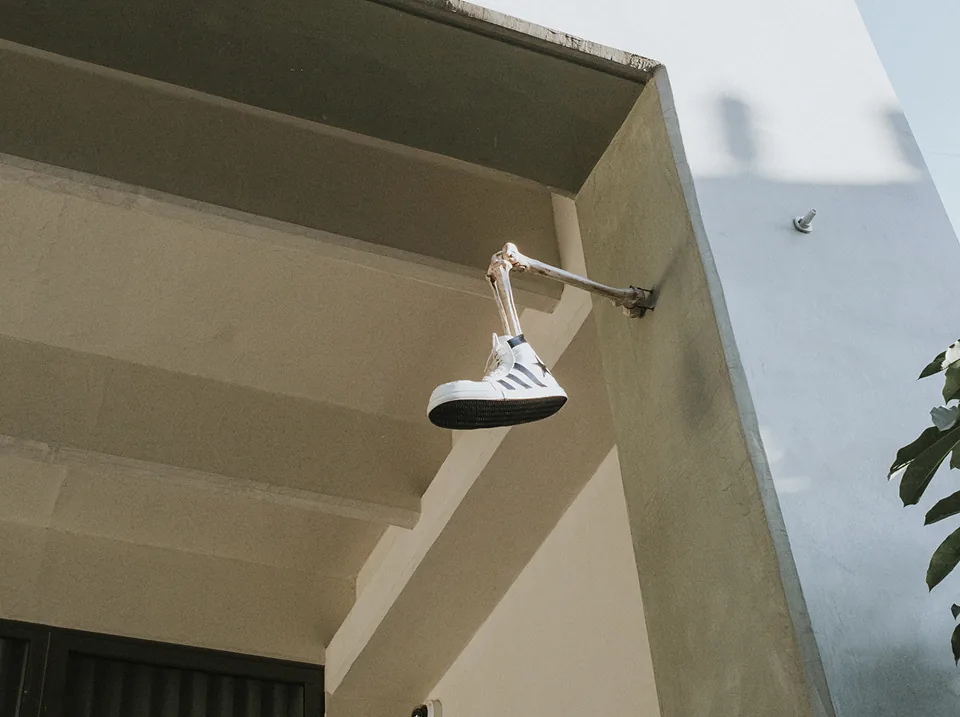
Outside, visible from the studios that face Calle Colima, Abraham Jiménez's Bone Leg. The piece sits in the Mexican calavera tradition of holding mortality with a light hand, neither morbid nor cute. After the Mármol, it's the work guests circle back to.
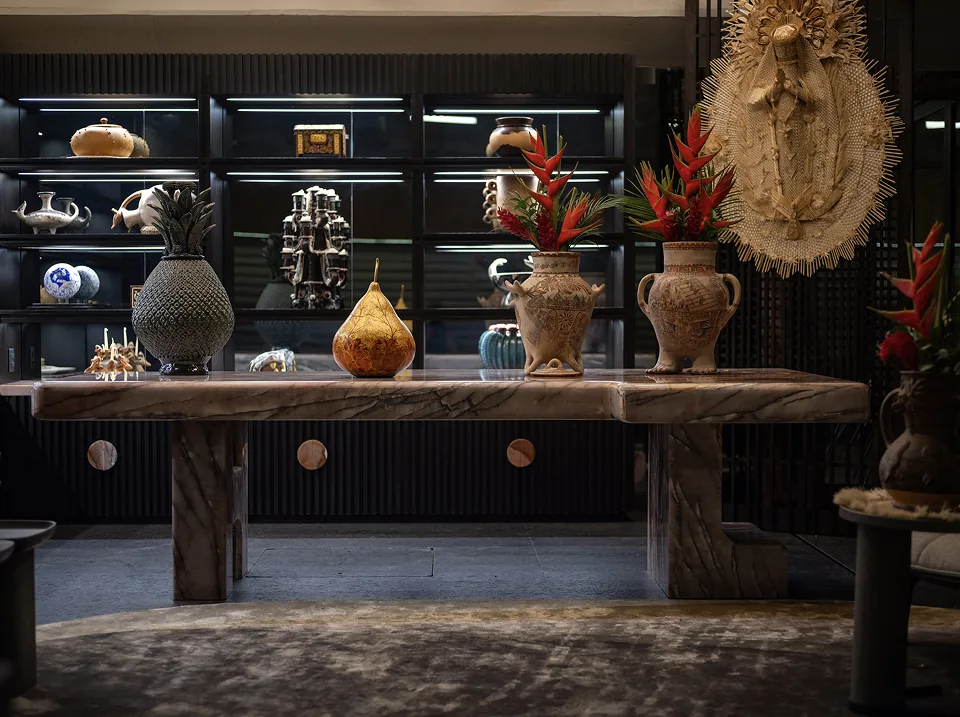
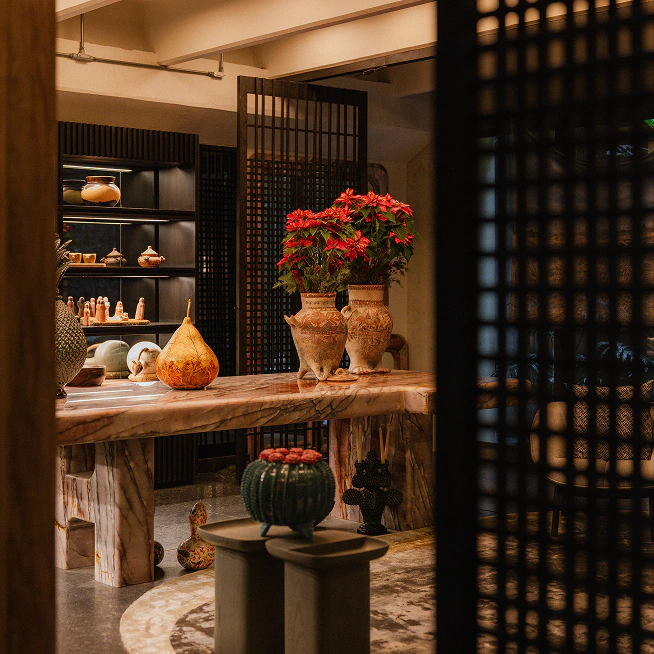
At Colima 71, we have slowly gathered a small collection of Mexican craft. The pieces come from the country's deepest workshop traditions in Oaxaca, Chiapas, Puebla, Michoacán and Guerrero, places where what we now call craft has been called the work for centuries: Clays that take a different colour in each town's earth, carved and painted wood, lacquer, copper.
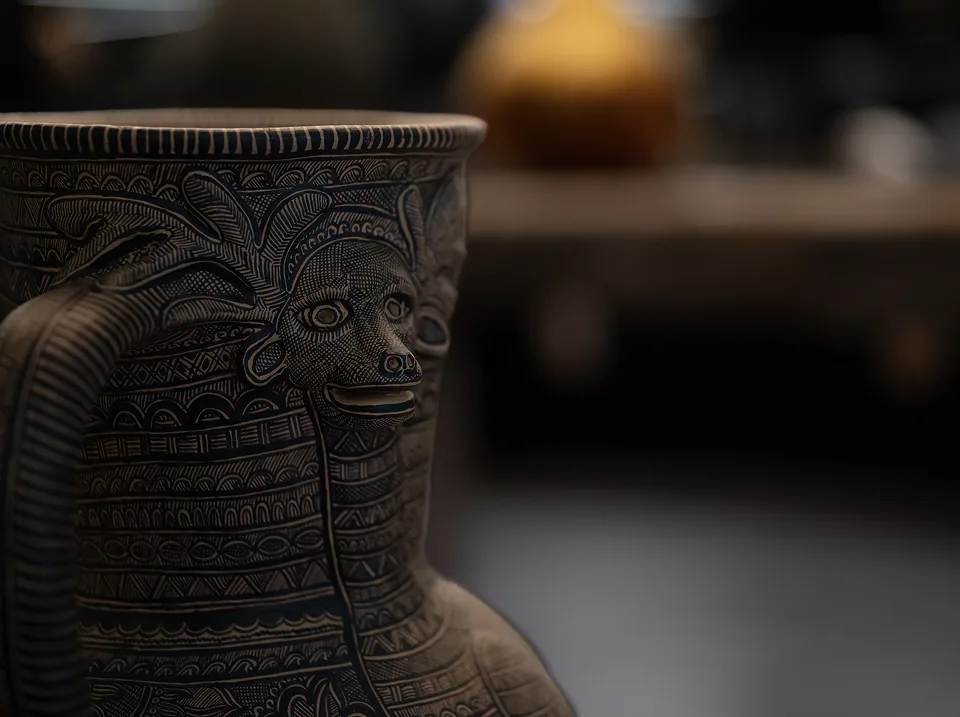
You meet the collection slowly through a stay. None of it announces itself; all of it is the work of hands that have been doing the same thing, the same way, for generations.
In the hands of Mexico's master artisans, craft is not decoration. It is the form a long memory takes when it has somewhere to live, passed from one pair of hands to the next, and worth the second look when you find it in a room.
None of it is decoration on the way to the room. Each piece is part of why the room is worth the trip.
Frequently Asked Questions: Art in Mexico City
Roma Norte is the creative heart, housing the most prestigious galleries.
Yes, including works by Sofía Táboas and Darío Escobar.
Absolutely, OMR and other landmarks are within a 5-10 minute walk.
Yes. As part of our Art Community commitment, our concierge can arrange private visits to local workshops, provide VIP access to the city's most prestigious galleries, and offer curated maps of the best art in Mexico City within walking distance of the hotel.
Roma Norte is the epicenter of the Mexico City creative lifestyle. It hosts the highest density of contemporary galleries, independent bookstores, and design showrooms in the country. Staying here allows travelers to immerse themselves in a walkable cultural circuit that connects the past's architecture with today's avant-garde art.
While our permanent collection features site-specific installations by masters like Sofía Táboas, we frequently collaborate with local galleries. We can facilitate connections between our guests and the artists or galleries represented in our spaces for those interested in acquiring contemporary Mexican art.
Immerse Yourself in the
Creative Soul of CDMX
Ready to rest among masterpieces?
Book your stay at the premier art-design hotel in Mexico City.
Book Your Artistic ExperienceFollow us on instagram!
@colima71